The Amalfi Coast doesn't need to be styled. It needs to be understood.
Every year I work as an Amalfi Coast wedding photographer between Positano and Vietri sul Mare, and the couples who end up with the images they hoped for have one thing in common.
They planned their day around how this coast actually works (its light, its staircases, its boats, its heat) rather than around a set of photographs they once saw online.
Here is what I wish every couple knew before they married here.
What an Amalfi Coast wedding photographer really does
The coast is vertical.
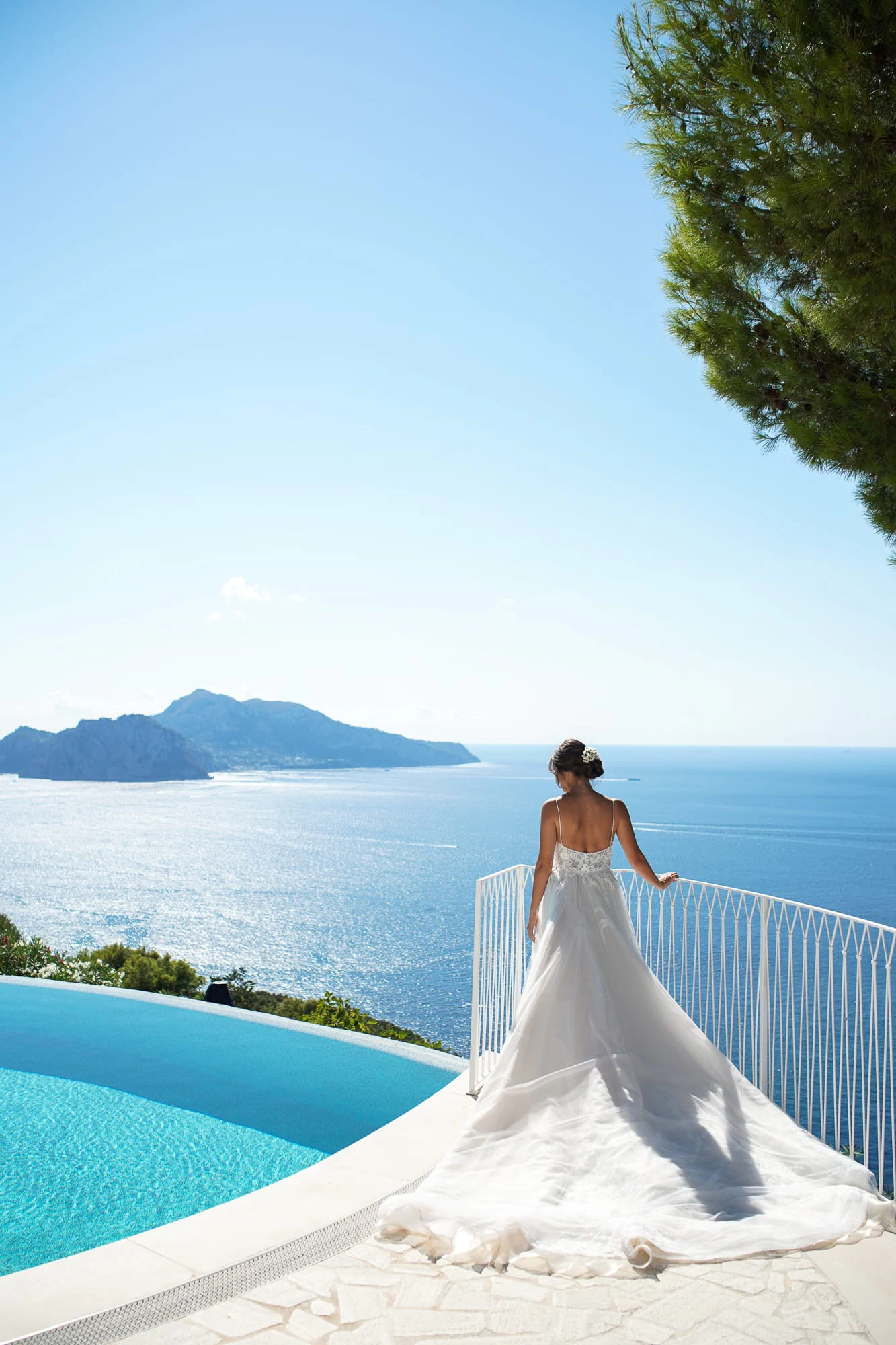
Towns are stacked up the cliff in ribbons of stairs, and the venues are terraces, cloisters, gardens and hotel rooftops rather than open lawns.
A photographer who knows the coast knows where the sun sits at six in the evening in July, which terrace falls into shadow first, how long the walk is between the church and the reception, and where you can stand for two quiet minutes without a crowd behind you.
That knowledge is what turns a beautiful location into a beautiful photograph.
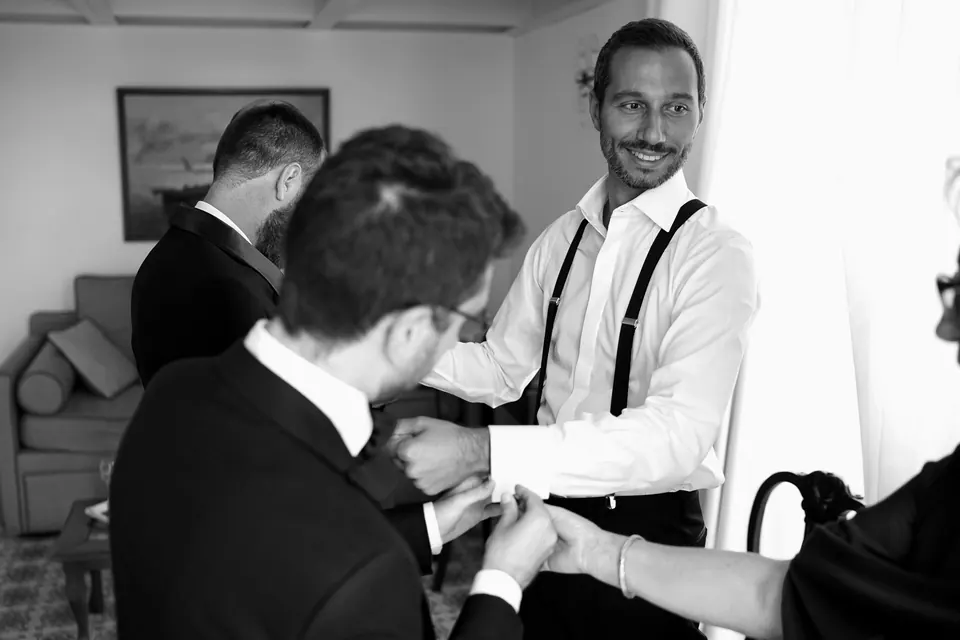
My approach is a blend of editorial and documentary. During your ceremony and reception I step back. During the preparations and your couple session I guide you gently, then leave space for the moment. I've written separately about editorial versus documentary wedding photography.
Every town has its own light
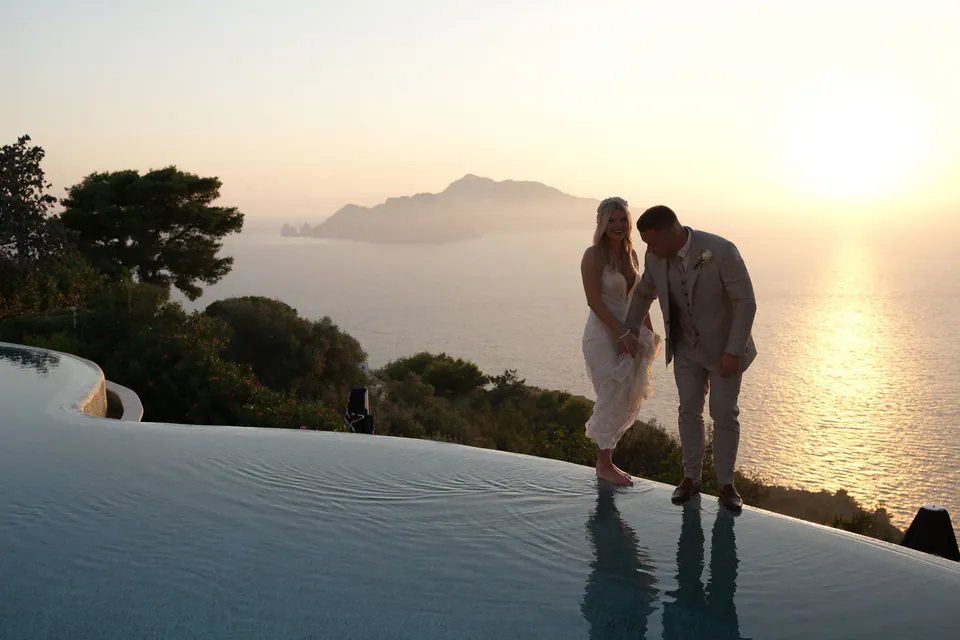
Positano faces south-west. Mornings are cool and shaded by the mountain; the light turns golden in the late afternoon, and the best colour arrives at sunset, straight down the coastline.
Ravello sits around 350 metres up. The air is cooler, the views are longer and hazier, and the sun sets behind the ridgelines rather than into open water.
Amalfi gives you the cathedral staircase, the morning life of the piazza and a working marina. Direct sun reaches the square late and leaves it early.
Capri and the open sea bounce light upward. Middays are bright and contrasty; the magic hour is at the Faraglioni.
My job is not to prove the coast is beautiful. It is to keep you at the centre of it.
Logistics that quietly shape your photos
Heat. From July to September the middle of the day is hard on everyone. We schedule your couple session for the first or last hour of light, never noon.
Boats. A short transfer by sea (even twenty minutes) is one of the best photographic opportunities of the day.
Crowds. The famous corners are busy from mid-morning. Early light and private terraces are how we work around them.
Stairs. Bring comfortable shoes for the couple session. We will climb.
Drone. Aerial coverage is included in most collections when regulations and weather allow, but the coast has real restrictions, so it is never guaranteed.
What I believe about photographing this coast
The Amalfi Coast will always be beautiful.
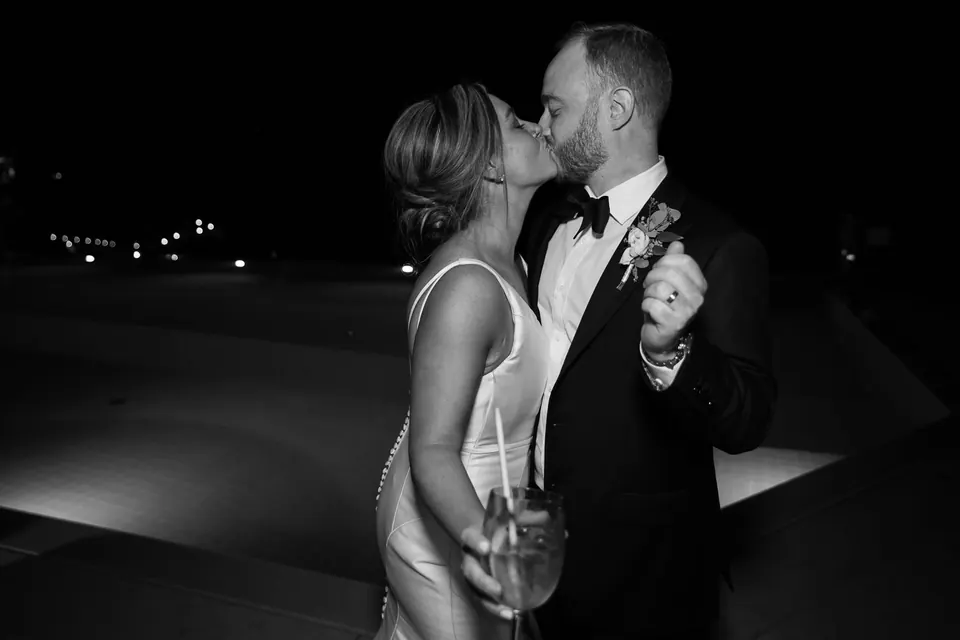
I photograph in a mix of colour and black and white, in natural light, with attention to the details and the landscape that made you choose this place.
Years from now you won't remember how long we spent taking pictures. You'll remember how natural it felt.
Planning your Amalfi Coast wedding
If you're getting married anywhere between Positano and Salerno, I'd love to hear about your day. Send me your date, your venue and a few words about what you're imagining, and I'll reply personally within 24 hours. You can also explore my wedding collections.
Frequently asked questions
How much does an Amalfi Coast wedding photographer cost?
My collections are starting points, not fixed packages. The investment depends on the hours of coverage, a second photographer, an album or a wedding film. Travel is arranged separately. Tell me about your day and I'll send you the collections that fit.
How far in advance should we book?
For weddings in high season (roughly July to October) nine to twelve months ahead, and some dates close more than a year out. In quieter months, four to five months is usually enough.
Which towns do you cover?
All of them. I'm based between Naples and the coast and photograph in Positano, Praiano, Conca dei Marini, Amalfi, Ravello and Maiori, as well as Capri and Sorrento.
Do we need one photographer or two?
For a full-day destination wedding I usually recommend two. For an elopement or a very intimate ceremony, one is often enough.
What happens if the weather turns?
Rain doesn't stop the day. We adapt the timeline, use cloisters and covered terraces, and often get the most atmospheric light just after a shower.