Getting married in Italy
Civil, symbolic or religious ceremony, the documents you need, what to budget for and when to book. A practical guide from a destination wedding photographer based on the Amalfi Coast, who works at these weddings every season.
- No residency needed
- Legal or symbolic
- Any month of the year
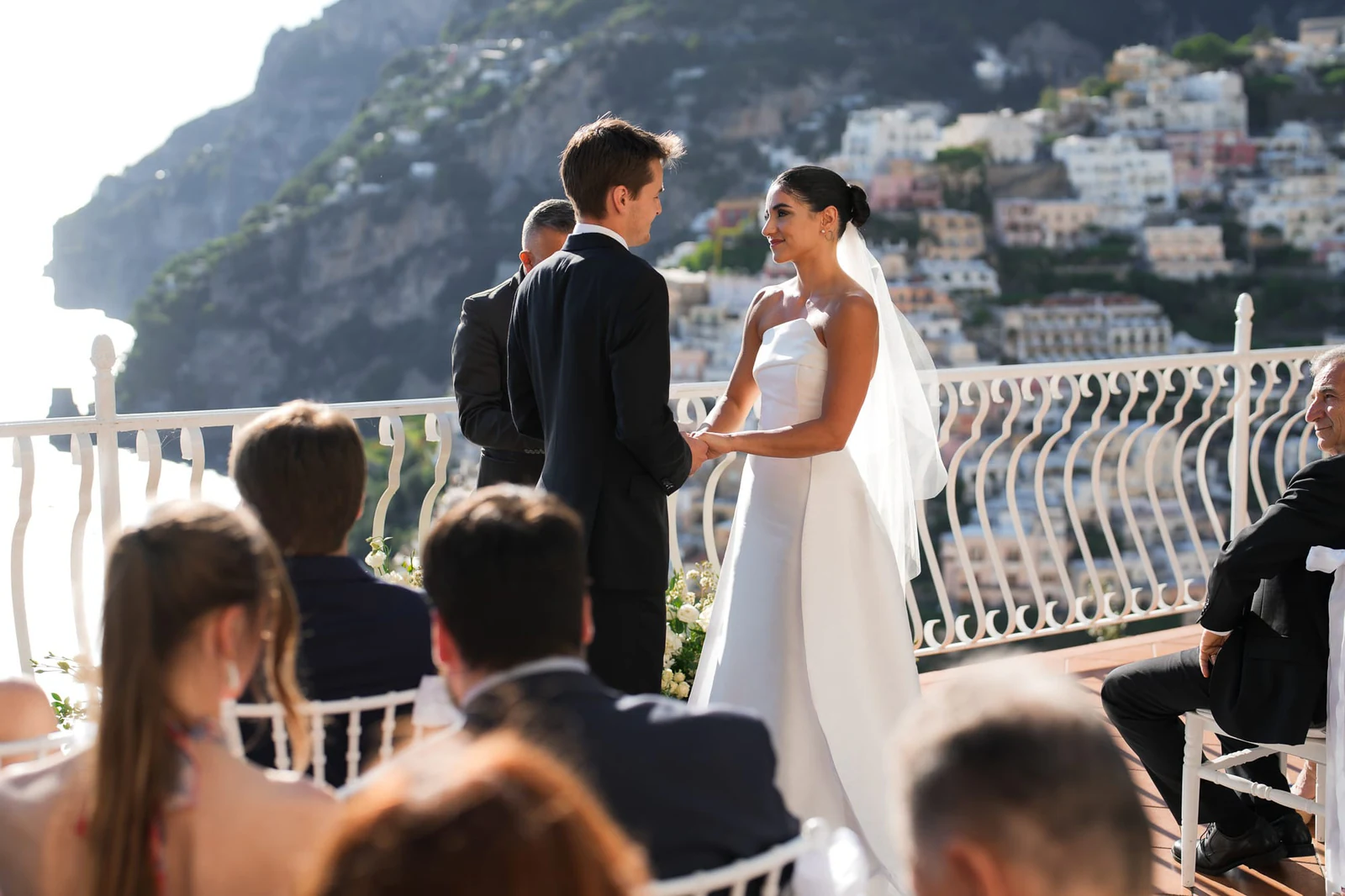
Three ways to say yes
Civil
Legally binding in Italy and at homeHeld at a town hall or at a venue the town has authorised. Once registered, it is recognised in your home country.
- Documents from your country, translated
- A declaration at the town hall before the day
- An interpreter if you don't speak Italian
- Two witnesses
Symbolic
The legal part at home, the celebration hereYou sign the papers at home, before or after, and celebrate in Italy wherever you like: a clifftop terrace, a garden, a villa. Many couples from abroad choose this.
- No Italian paperwork
- Any place, any time of day
- Your own words and your own officiant
Religious
Church, synagogue or other faithsA Catholic wedding can also be legally valid, with extra paperwork through your parish: allow about six months. Other faiths usually need a separate civil ceremony.
- Paperwork through your parish at home
- Pre-marriage course for Catholic weddings
- Church fees and rules on photography
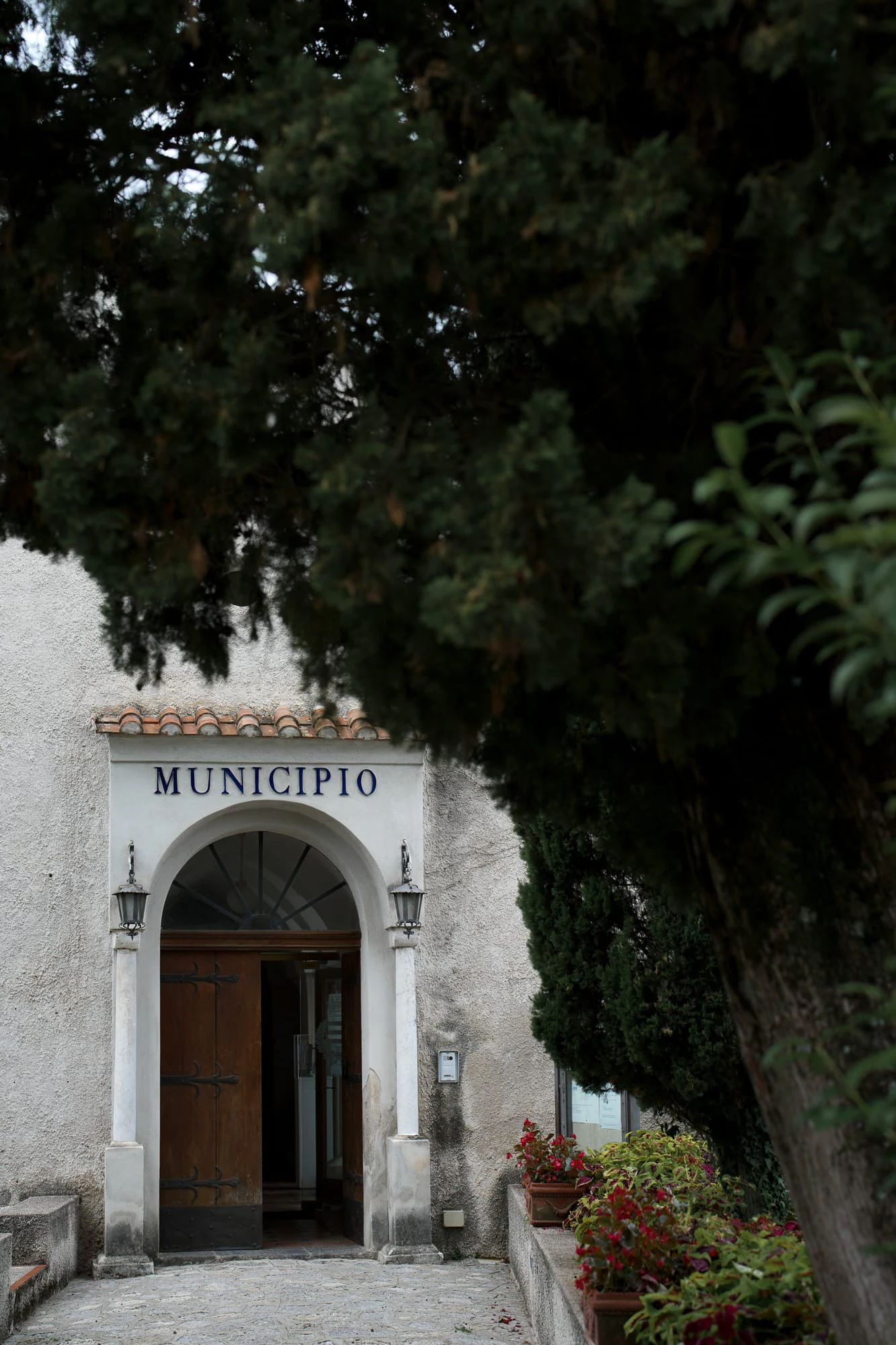
Documents for a civil wedding
What you need depends on your nationality. This is the usual list for couples from the UK, the US, Canada and Australia.
- A valid passportfor both of you
- Birth certificatewith an apostille, translated into Italian
- Nulla ostaa certificate of no impediment, issued by your consulate or embassy
- Atto notorioa sworn statement, required for some nationalities, US citizens among them
- Declaration of intentionsigned at the town hall a few days before the wedding
- If either of you was married beforethe divorce decree or death certificate, apostilled and translated
Rules change and differ from country to country. Always check with your embassy or consulate, or let your wedding planner handle the paperwork.
What it costs
The ceremony itself is rarely the big number. Town hall fees vary a lot from town to town and with the season, and the most sought-after places on the Amalfi Coast cost more. Add translations, apostilles and an interpreter for a civil ceremony; an officiant for a symbolic one.
The real budget is the venue, food, flowers, music and the people who tell the day: planner, photographer, filmmaker. Plan the photography early in the budget: it's the part of the day you'll keep.
When to book what
- 12–18 months
Choose the date and the venue. If you're working with a wedding planner, start with them.
- 9–12 months
Book your photographer. From July to October, the most requested dates close a year ahead.
- 6 months
Religious paperwork, if you're marrying in church.
- 2–3 months
Collect and translate your documents for a civil ceremony.
- 1–2 weeks
A call to build the timeline of the day, with your planner.
- A few days before
The declaration at the town hall, for a civil wedding.
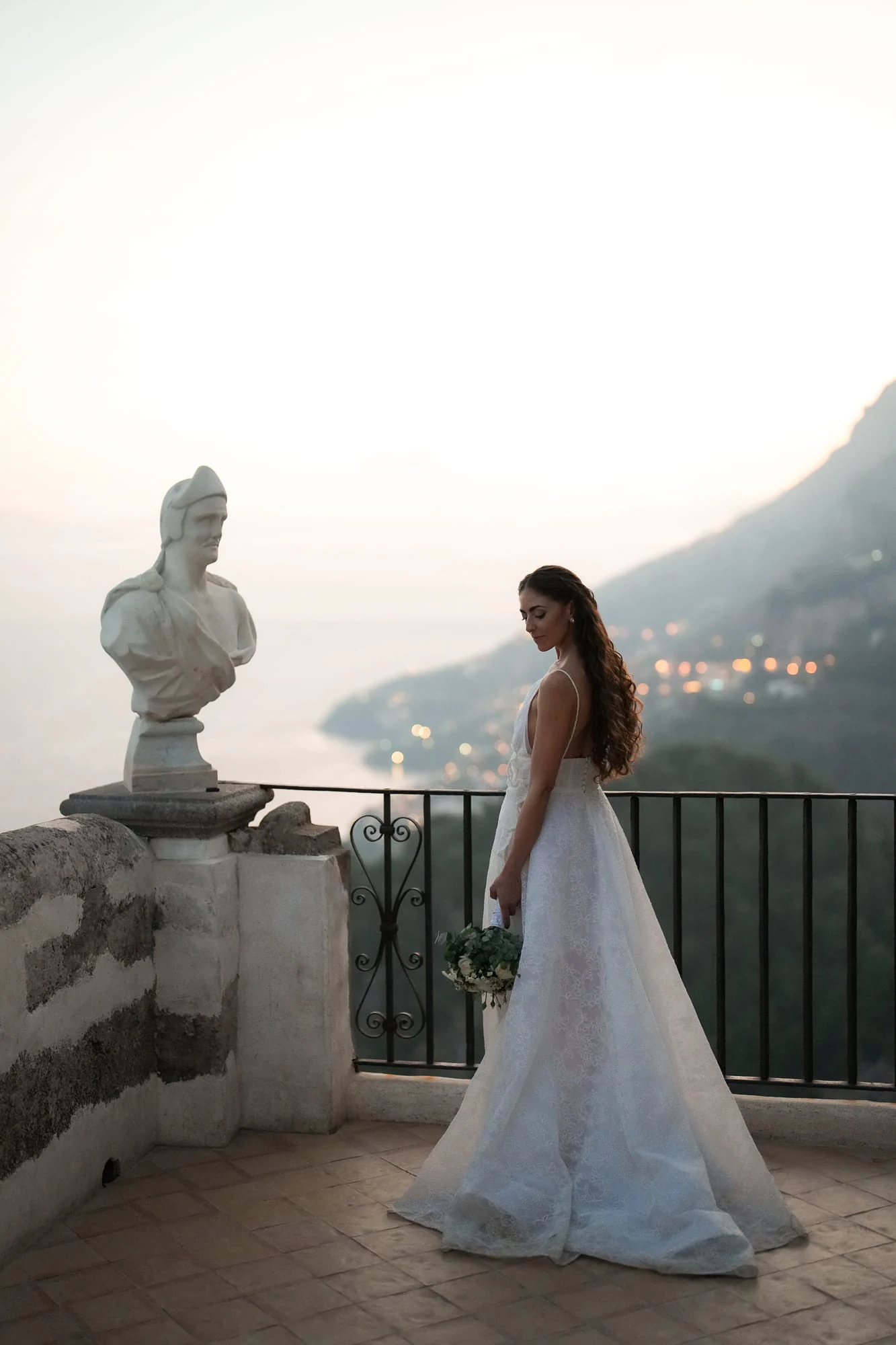
Where I come in
I photograph weddings on the Amalfi Coast, in Tuscany, on Lake Como, in Puglia and on Capri. I work quietly: during the ceremony and the reception I watch without directing, and I build the timeline of the day with you and your planner so that every moment has the right light.
Questions couples ask
Do we need to live in Italy to marry here?
No. There is no residency requirement: you only need the documents and the declaration at the town hall a few days before.
Is a symbolic ceremony legally valid?
No, it has no legal value on its own. That's why couples sign the papers at home, before or after, and keep the ceremony in Italy free from bureaucracy.
Can same-sex couples marry in Italy?
Italy offers civil unions for same-sex couples, foreigners included. Many couples marry at home and celebrate here with a symbolic ceremony.
How far ahead should we book a photographer?
For July to October, 9 to 12 months. For the rest of the year, 4 to 5 months is usually enough.
Do we need a wedding planner?
It isn't required, but for a wedding abroad with guests travelling, a local planner saves you time and stress. I often work with planners, and with couples who organise everything themselves.
Tell me about your wedding
Your date, the place and a little about the two of you. I reply myself within 24 hours, with my availability for that date.